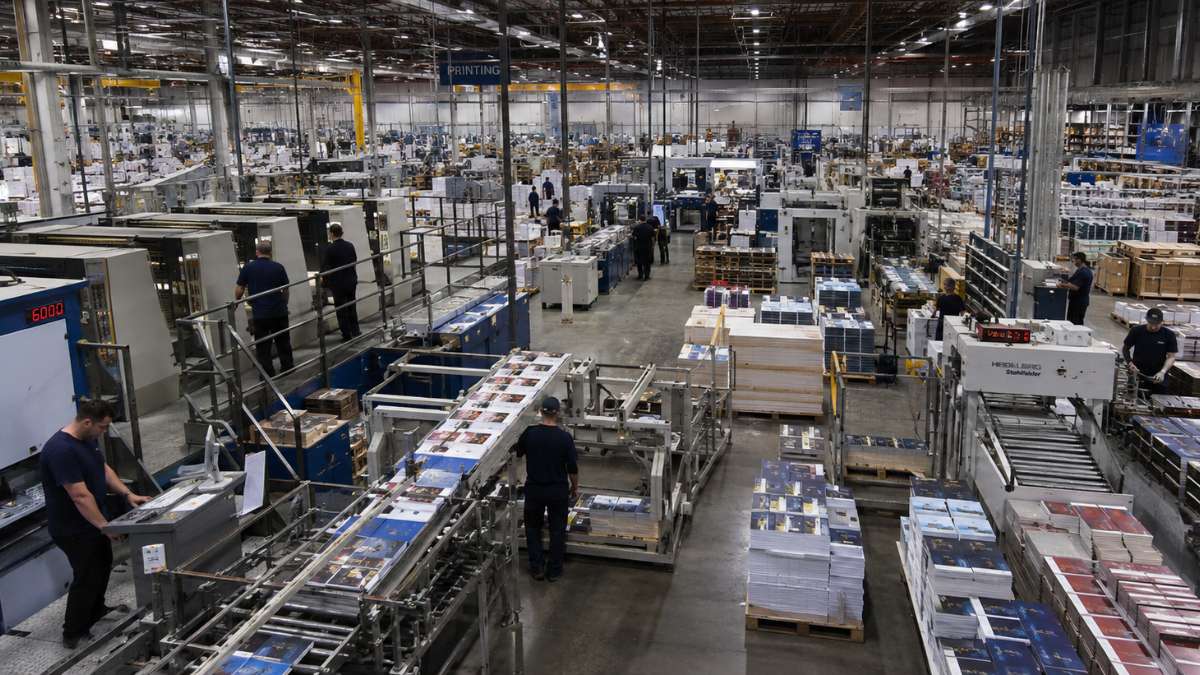
Introduction: The Death of Print Has Been Greatly Exaggerated
For more than two decades, publishing has lived under the shadow of a prediction that seemed inevitable. First came ebooks. Then smartphones. Then streaming platforms. Then social media. Most recently, artificial intelligence entered the conversation. Each wave of technological change arrived with the same underlying assumption: physical books would eventually become obsolete. Print would survive for a while, perhaps as a niche format for collectors and traditionalists, but the future belonged to digital consumption.
The logic appeared sound. Music had largely moved from CDs to streaming. Newspapers struggled as readers migrated online. Video rental stores disappeared. Software became cloud-based. Entire industries transformed as digital alternatives became faster, cheaper, and more convenient. Publishing seemed destined to follow the same path. By the early 2010s, many industry observers were confidently forecasting a future in which ebooks dominated reading habits and physical bookstores became increasingly rare.
Yet the European publishing industry tells a remarkably different story.
Europe’s book market reached a record turnover of approximately $27 billion in 2024. At first glance, this appears to confirm that publishing remains a healthy and resilient industry. More surprising, however, is the format breakdown behind those revenues. Physical books continue to generate 82.9% of the industry’s total turnover. Audiobooks, despite years of impressive growth, account for only 4.2% of revenue. Meanwhile, physical bookstores still represent nearly half of all book sales across Europe, maintaining a market share of 48.2%.
These figures challenge one of the most widely accepted assumptions in modern publishing. If digital technology is transforming every aspect of media consumption, why does print continue to dominate one of the world’s largest publishing markets? Why have physical books remained so resilient while other media formats have undergone dramatic digital disruption?
The answer is more complex than simple nostalgia. Readers are not buying print books merely because they are resistant to change. Publishers are not clinging to paper because they fear innovation. Instead, the continued strength of print reveals something important about reading itself. Books are fundamentally different from many other forms of media. The act of reading, the psychology of ownership, the role of bookstores, and the growing demand for trusted content all contribute to an environment where physical books continue to offer unique value.
In fact, the most surprising possibility is that the digital age may not be weakening print at all. It may actually be strengthening it. As screens dominate daily life, physical books increasingly offer something that digital platforms struggle to replicate: focus, permanence, trust, and a deeper form of engagement. Rather than becoming relics of the past, printed books may be evolving into one of the most valuable cultural products of the future.
The European publishing industry provides a fascinating case study of this phenomenon. Its experience suggests that the future of publishing may not be a battle between print and digital. Instead, it may be a future in which both formats coexist, with physical books continuing to play a central and profitable role.
The Digital Revolution Happened. Print Survived Anyway.
The narrative of publishing over the last twenty years is often presented as a story of digital disruption. In reality, it may be more accurately described as a story of digital adaptation. The revolution certainly happened. Ebooks arrived. Online retailers transformed distribution. Audiobooks became mainstream. Reading habits changed. What did not happen was the elimination of print.
When Amazon introduced the Kindle in 2007, many observers believed they were witnessing the beginning of the end for physical books. The comparison with music seemed obvious. Just as MP3s and streaming services had reduced the importance of CDs, ebooks appeared poised to make printed books increasingly irrelevant. Publishers invested heavily in digital workflows. Analysts predicted rapid declines in print sales. Some even questioned whether bookstores would survive the decade.
For a brief period, those predictions appeared plausible. Ebook sales surged in major English-language markets. Digital reading devices became more sophisticated and affordable. Consumers embraced the convenience of carrying hundreds of books on a single device. The future seemed obvious.
Then something unexpected happened.
Ebook growth slowed. In some markets, it plateaued. In others, it even declined. Rather than replacing print, digital reading settled into a stable position alongside physical books. Readers who adopted ebooks often continued purchasing printed books as well. Instead of witnessing a complete format transition, the industry experienced something closer to format diversification.
Europe illustrates this reality particularly well. Despite years of investment in digital publishing and the continued expansion of audiobook platforms, physical books still generate more than four-fifths of total industry revenue. This is not a sign of technological failure. Digital formats have unquestionably succeeded. Audiobooks continue to grow rapidly. Ebook ecosystems remain important. Online retail has become an essential sales channel. Yet none of these developments has fundamentally displaced print.
The persistence of print becomes even more striking when compared with other industries. Music consumption today is overwhelmingly digital. Video entertainment is dominated by streaming services. News increasingly reaches audiences through smartphones and social media feeds. Publishing stands apart because readers continue to demonstrate a willingness to purchase, store, display, and read physical products in large numbers.
Part of the explanation lies in a misunderstanding that has shaped technology forecasting for decades. Analysts often assume that new technologies automatically replace older ones. In reality, technological history is filled with examples of coexistence. Radio survived television. Movie theaters survived home video. Vinyl records survived digital music. In each case, older formats adapted rather than disappeared.
Books appear to be following a similar path.
Digital formats offer undeniable advantages. They are portable, searchable, and instantly accessible. Audiobooks allow consumers to enjoy stories while commuting, exercising, or completing household tasks. Ebooks can be purchased and downloaded within seconds. These benefits are real, and they explain why digital formats have become important parts of the publishing ecosystem.
At the same time, physical books offer advantages of their own. They do not require batteries. They provide a tactile experience. They can be gifted, displayed, borrowed, and collected. Most importantly, they align remarkably well with the cognitive demands of sustained reading. While digital formats excel at convenience, print continues to excel at engagement.
The result is not a winner-takes-all market. Instead, publishing has evolved into a multi-format industry in which different formats serve different purposes. Consumers increasingly choose the format that best matches a particular reading situation rather than committing exclusively to one format.
This distinction is crucial because it changes how we understand the future of publishing. The key question is no longer whether digital will replace print. The evidence suggests that the battle has already been decided. Print survived. The more relevant question is why it survived, and why millions of readers continue to prefer physical books despite having access to increasingly sophisticated digital alternatives.
The Psychology of Reading Favors Print
To understand why print remains dominant, it is necessary to examine a simple but often overlooked reality: reading a book is fundamentally different from consuming most forms of digital content.
Modern technology companies compete fiercely for human attention. Social media platforms are designed to maximize engagement. Streaming services encourage continuous viewing. News websites prioritize rapid consumption and frequent updates. Nearly every digital environment is optimized to keep users clicking, scrolling, and returning.
Books operate according to an entirely different logic.
Reading a book requires sustained concentration over extended periods of time. It asks readers to slow down rather than speed up. It rewards patience rather than instant gratification. Unlike social media feeds, books are not designed to deliver constant novelty. Instead, they demand immersion. The reader must remain engaged with a single narrative, argument, or idea for hours rather than seconds.
This distinction matters because human cognition appears to respond differently to print and screens.
Researchers have repeatedly found that reading on paper often supports stronger comprehension and retention, particularly for longer and more complex texts. Educational institutions across Europe continue to emphasize the cognitive benefits associated with print reading. The publishing report itself notes that educational researchers consistently highlight deeper learning outcomes and greater cognitive engagement when readers interact with physical materials rather than screens.
Part of this advantage stems from the physical nature of books. Readers can visually and physically navigate a printed text. They develop spatial awareness of where information appears within a book. Pages provide visual landmarks. Progress becomes tangible. These seemingly minor factors contribute to how readers process and retain information.
Equally important is the absence of distraction.
A printed book performs exactly one function. It delivers content. It does not display notifications. It does not tempt readers with emails, messages, advertisements, or social media updates. In an era when attention has become one of the world’s most contested resources, this simplicity represents a significant competitive advantage.
The irony is striking. Many people assumed that digital technology would make reading easier and more accessible. In some ways it has. Yet the same devices that provide access to books also provide access to countless distractions. Smartphones place entire libraries in readers’ pockets, but they also place TikTok, Instagram, YouTube, news alerts, games, and messaging apps in the same location.
As digital distractions multiply, the ability to focus becomes increasingly valuable. Physical books offer a practical solution. They create an environment in which deep reading remains possible. Rather than competing directly with digital technology, print increasingly functions as an escape from it.
This may explain why younger generations are often more interested in physical books than many industry observers expected. While younger readers are certainly comfortable with technology, they are also growing up in the most digitally saturated environment in human history. For them, a printed book can represent something increasingly rare: uninterrupted attention.
The continued dominance of print suggests that reading is not merely about accessing information. It is about how that information is experienced. Digital formats excel at convenience. Physical books excel at immersion. For millions of readers across Europe, that difference remains significant enough to influence purchasing decisions.
Far from becoming obsolete, print may be benefiting from a cultural shift that places increasing value on focus, intentionality, and meaningful engagement. In a world overflowing with content, the format that best supports deep reading continues to hold a powerful advantage.
Physical Books Are More Than Content
One of the biggest mistakes made by technology forecasters is assuming that books compete solely based on content. Under that assumption, digital formats should have won years ago. After all, an ebook contains the same words as a printed book. An audiobook delivers the same story. If content were the only factor that mattered, the cheaper and more convenient format would eventually dominate.
But books are not merely containers for information.
A physical book is simultaneously a cultural object, a personal possession, a design artifact, and a reading experience. Readers do not simply consume books. They interact with them in ways that extend far beyond the text itself. They place them on shelves. They lend them to friends. They gift them to family members. They display them in offices and living rooms. They associate them with memories, achievements, and personal identities.
An ebook can deliver content efficiently. It cannot sit on a shelf as a visible reminder of a reader’s interests and experiences.
This distinction may sound superficial, but it carries significant economic implications. Consumers routinely pay premiums for physical products that provide emotional value in addition to functional utility. Luxury watches tell time no better than smartphones. Vinyl records are less convenient than streaming services. Mechanical keyboards are not necessary for typing. Yet all of these products continue to attract passionate customers because ownership itself creates value.
Books belong to this category more than many publishers acknowledge.
A personal library serves purposes that go far beyond reading. It reflects curiosity, expertise, aspiration, and identity. Visitors often learn more about a person by examining their bookshelves than by examining their social media profiles. Physical books create visible evidence of intellectual interests. They transform reading from a private activity into part of a person’s environment.
This helps explain why beautifully produced editions continue to thrive. Publishers increasingly invest in premium hardcovers, sprayed edges, foil stamping, special bindings, collector editions, and luxury packaging. Such products are not competing against ebooks on convenience. They are competing on desirability. Consumers are purchasing an experience, an object, and a statement about themselves.
The rise of social media has ironically amplified this trend. Platforms like BookTok and Bookstagram frequently emphasize the visual appeal of books. Readers showcase shelves, collections, special editions, and carefully curated reading spaces. The physical presence of books becomes part of the attraction. Digital files cannot participate in this ecosystem in the same way.
Ownership itself has also become increasingly valuable in the broader digital economy.
Modern consumers are becoming accustomed to subscription models. They subscribe to music libraries they do not own. They stream movies they do not possess. They access software through monthly fees. Increasingly, people are paying for temporary access rather than permanent ownership.
Books remain one of the few major media products where ownership still feels meaningful.
When readers purchase a printed book, they acquire something tangible and lasting. The book remains available regardless of licensing agreements, platform closures, software updates, or corporate decisions. It can be passed to children, donated to libraries, or rediscovered decades later. That permanence offers reassurance in an increasingly transient digital environment.
This does not mean ebooks lack value. Millions of readers enjoy them every day. However, it does suggest that physical books compete on dimensions that extend beyond content delivery. They satisfy emotional, cultural, and psychological needs that digital alternatives often struggle to replicate.
The continued success of print is therefore not simply a publishing story. It is part of a broader consumer trend in which people seek physical experiences and tangible ownership within an increasingly virtual world. The more digital life becomes, the more valuable certain physical objects appear to become.
Books happen to be among the most successful examples.
Bookstores Refused to Die
If physical books were expected to disappear, physical bookstores were expected to disappear even faster.
Few predictions seemed more certain during the rise of Amazon than the eventual decline of brick-and-mortar bookselling. Online retailers offered larger inventories, lower prices, and greater convenience. Consumers could order books from their homes and have them delivered within days, sometimes within hours. Traditional bookstores appeared vulnerable to the same forces that devastated many other retail categories.
Yet Europe’s publishing market once again tells a more complicated story.
Physical bookstores currently account for approximately 48.2% of all book sales across Europe. Although this figure remains slightly below pre-pandemic levels, it represents a significant recovery from the disruptions experienced during the early 2020s. Despite years of digital transformation, nearly half of all book purchases still occur inside physical stores. That is an extraordinary level of resilience in an age dominated by ecommerce.
The reason bookstores survive is that they perform functions that online retailers struggle to replicate.
The first is discovery.
Online retail platforms excel when consumers already know what they want. Search boxes work brilliantly when readers are looking for a specific title or author. Discovery is different. Many readers enter bookstores without a predetermined purchase in mind. They browse. They explore unfamiliar subjects. They encounter books they never knew existed.
This process remains surprisingly difficult to reproduce digitally.
Recommendation algorithms can be effective, but they generally rely on historical behavior. They tend to recommend books similar to those a reader has already purchased. Bookstores encourage serendipity. A reader searching for history may unexpectedly encounter a memoir. Someone browsing literary fiction may leave with a science book. Physical proximity creates opportunities for unexpected discovery.
The second advantage is trust.
Modern consumers face an overwhelming abundance of content. Millions of books are available through online marketplaces. Self-publishing platforms release enormous volumes of new material every year. Artificial intelligence is accelerating content production even further.
In such an environment, curation becomes increasingly important.
Bookstores function as trusted filters. Readers assume that books displayed on shelves have passed through multiple layers of editorial judgment. Staff recommendations provide human guidance. Featured displays highlight noteworthy titles. The store itself becomes a mechanism for reducing uncertainty.
This role may become even more important as AI-generated content proliferates across digital marketplaces.
The third advantage is community.
Independent bookstores in particular have evolved into cultural spaces rather than simple retail outlets. They host author events, book clubs, discussions, workshops, and educational programs. They provide opportunities for readers to interact with one another and with literary culture more broadly.
Online retailers can sell books efficiently. They cannot easily replicate the social and cultural functions of a local bookstore.
The continued relevance of bookstores demonstrates an important principle about publishing. Reading is not merely a transaction. It is part of a larger ecosystem involving discovery, recommendation, discussion, and community engagement. Physical bookstores remain central to that ecosystem because they provide experiences that digital platforms cannot fully replace.
Their survival is not evidence of resistance to innovation. It is evidence that readers still value human connection and curated experiences in a market increasingly dominated by algorithms.
Audiobooks Are Growing Fast, But They’re Not Replacing Print
Any discussion of print’s future must acknowledge a simple reality: audiobooks are no longer a niche format.
Across Europe, audiobook adoption continues to accelerate. The United Kingdom offers one of the clearest examples. The country’s audiobook market grew by approximately 10% in the latest reporting period, generating roughly $345 million in revenue. Audiobooks now account for around 10% of the UK consumer publishing market, a remarkable achievement for a format that occupied only a small corner of the industry a generation ago.
The rise of Spotify has further accelerated this transformation.
Over the past few years, Spotify has expanded its audiobook catalog from roughly 150,000 titles to more than 700,000. The platform continues to roll out audiobook services across European markets, exposing millions of consumers to long-form audio content through a service they already use for music and podcasts. Audiobooks are becoming integrated into everyday digital habits in ways that traditional publishers could scarcely have imagined a decade ago.
The appeal is obvious.
Audiobooks allow consumers to transform previously unproductive time into reading time. Commuters can listen while driving. Parents can listen while performing household tasks. Fitness enthusiasts can listen while exercising. Audiobooks fit naturally into modern lifestyles characterized by constant movement and competing demands on attention.
For publishers, this creates exciting opportunities. Audiobooks enable books to reach consumers who may never have purchased a printed edition. They expand the market rather than merely redistributing existing readers across formats. Many consumers who regularly listen to audiobooks continue to buy printed books as well.
This point is crucial because it highlights a common misunderstanding about format competition.
The publishing industry often frames discussions in terms of replacement. Will ebooks replace print? Will audiobooks replace ebooks? Will AI replace authors?
Reality is usually more nuanced.
Different formats often serve different purposes. A consumer may listen to an audiobook during a morning commute, read a printed book before bed, and consult an ebook while traveling. These formats are not necessarily competitors. They frequently complement one another.
Reading and listening, despite their similarities, are also distinct experiences.
Listening excels in situations where visual attention is unavailable. Reading excels in situations requiring concentration, analysis, and reflection. Students studying complex material generally prefer text. Professionals reviewing detailed information often rely on printed documents. Readers engaging with challenging nonfiction frequently appreciate the ability to pause, reread, annotate, and reflect.
Audiobooks provide many benefits, but they do not eliminate these needs.
Even Spotify appears to recognize this reality. The company has increasingly experimented with features that connect audiobook listening to physical book purchasing, effectively acknowledging that consumers often move between formats rather than abandoning one format for another.
This pattern suggests that audiobooks represent an expansion of publishing rather than a threat to print. They attract new audiences, create new revenue streams, and increase engagement with books. Yet their growth does not necessarily imply the decline of physical reading.
If anything, the evidence points toward a future in which successful publishers operate across multiple formats simultaneously. Readers will choose the format best suited to a particular situation. Physical books will remain central because they continue to offer advantages that no other format fully replicates.
The audiobook boom is real. But so is the enduring strength of print. The two developments are not contradictory. They are simply different expressions of how people engage with stories, knowledge, and ideas.
Europe Has Become a Stronghold for Print Culture
One reason print continues to thrive in Europe is that many European countries still view books differently from the way they are viewed in much of the technology sector.
In Silicon Valley, books are often treated as content products. They compete for attention alongside videos, podcasts, social media feeds, newsletters, and streaming platforms. Success is frequently measured through scale, engagement metrics, and platform growth.
Across much of Europe, books are still viewed as a cultural asset.
This distinction may sound philosophical, but it has profound economic consequences. When a society views books as cultural assets rather than merely commercial products, it tends to create institutions, policies, and consumer behaviors that support long-term reading habits. Europe has spent decades building such an environment.
Germany provides one of the clearest examples. Despite experiencing sales pressures and demographic challenges, the country remains one of the world’s most important publishing markets. Its bookstore network remains extensive. Readers continue to support local booksellers. The industry benefits from strong cultural traditions surrounding reading and literary life.
Even in a difficult market, fiction continues to perform well, particularly among younger readers between the ages of 16 and 29. These readers are helping sustain categories such as “New Adult” fiction and genre literature, demonstrating that younger generations have not abandoned books as many observers feared.
Germany has also produced one of the most remarkable publishing stories of the digital era.
While Amazon dominates ebook markets in many countries, Germany developed a viable alternative through the Tolino alliance. By 2026, Tolino controlled approximately 40% of the German ebook market, effectively matching Amazon’s share. Such an outcome is almost unheard of elsewhere in the world, where Amazon often commands between 80% and 95% of ebook sales. The success of Tolino reflects a broader cultural preference among many German readers for supporting domestic bookselling ecosystems and trusted literary institutions.
France offers another fascinating example.
The French market faces significant challenges, including declining reading rates and increasing competition from secondhand books. Yet the country’s literary culture remains remarkably influential. Publishers actively invest in adaptation rights, leveraging film and television to introduce books to new audiences.
In a survey, 43% of readers were found to be motivated to read a book after viewing its adaptation, and the figure rises to 75% among consumers under 20. Rather than viewing books as isolated products, the French industry increasingly treats them as intellectual properties capable of generating value across multiple media channels.
Italy tells a similar story. Although the market has experienced contraction, the country continues to position publishing as an important component of national cultural life. Italian publishers remain active in international rights trading, translation markets, and literary promotion. Discussions within the industry increasingly focus on how new technologies can support publishing rather than replace it.
Collectively, these examples highlight an important reality. Europe’s continued commitment to books extends beyond consumer preferences. It is reinforced by institutions, traditions, educational systems, bookstores, publishers, and public policies that recognize the broader social value of reading.
This may help explain why Europe has become one of the strongest global markets for physical books. The continent’s publishing industry operates within a cultural environment that continues to value reading as something more than entertainment. In such an environment, print retains advantages that are difficult to replicate elsewhere.
The lesson for American publishers is not that Europe has resisted technological change. Europe has embraced digital publishing, audiobooks, ecommerce, and artificial intelligence. What it has not abandoned is the belief that books occupy a unique place within society.
That belief continues to support the economic strength of print.
AI May Actually Make Print More Valuable
Conventional wisdom suggests that artificial intelligence represents a threat to traditional publishing.
There are certainly reasons to be concerned. AI systems can generate articles, summaries, marketing copy, translations, and even entire books. Online marketplaces are already experiencing an influx of low-quality AI-generated titles. Publishers face difficult questions about copyright, licensing, attribution, and content authenticity. Across Europe, industry organizations are actively lobbying governments to strengthen copyright protections in response to AI training practices.
Yet there is another possibility that receives far less attention.
AI may ultimately strengthen the value of printed books.
The reason has little to do with technology itself and everything to do with trust.
Throughout history, scarcity has influenced value. When something becomes abundant, consumers begin searching for signals that help distinguish quality from quantity. The internet dramatically increased the volume of available information. Social media multiplied content production even further. Artificial intelligence is now accelerating this process at an unprecedented scale.
The result is not merely more content.
It is more uncertainty.
Readers increasingly face questions such as:
- Who wrote this?
- Can this information be trusted?
- Was this work reviewed by experts?
- Does anyone stand behind its accuracy?
As AI-generated content floods digital platforms, these questions become increasingly important.
The French publishing industry is already witnessing this phenomenon. Industry estimates suggest that an overwhelming proportion of certain niche books appearing on major online marketplaces may have been generated with substantial AI assistance. Regardless of the exact percentage, the broader concern is clear. Readers are struggling to distinguish carefully developed works from rapidly produced synthetic content.
This environment creates opportunities for traditional publishers.
Historically, publishers served as gatekeepers. The internet weakened that role by enabling direct distribution. AI may partially reverse the trend by increasing demand for trusted intermediaries. Readers confronted with endless volumes of questionable content may increasingly seek signals of credibility.
Physical books provide one such signal.
A printed book generally represents a significant investment. Someone edited it. Someone designed it. Someone financed its production. Someone accepted the risk of manufacturing and distributing a physical object. The existence of the book itself suggests a level of commitment that is often absent from low-cost digital content.
This does not guarantee quality, of course. Poor books existed long before AI. However, physical publishing creates friction. Friction requires decisions. Decisions require accountability.
That accountability may become increasingly valuable.
The Tolino story in Germany illustrates this dynamic. Part of the platform’s appeal stems from its reputation for curation and quality. As Amazon struggles with growing volumes of AI-generated material, some readers increasingly view curated environments as safer and more trustworthy. What began as a technological competition is gradually becoming a trust competition.
Ironically, AI may ultimately reinforce one of publishing’s oldest strengths: editorial judgment.
In a world where content can be generated instantly and at virtually no cost, readers may become less interested in abundance and more interested in credibility. They may place greater value on books that have undergone rigorous review, thoughtful editing, and professional production.
Physical books are uniquely positioned to benefit from this shift.
The future may therefore look very different from the scenarios often imagined by technology enthusiasts. Rather than replacing books, AI could make carefully produced books more desirable. Rather than eliminating publishers, AI could increase demand for trusted publishers. Rather than rendering print obsolete, AI could elevate its status as a premium format associated with authenticity and quality.
The more content machines generate, the more valuable human judgment may become.
The Future of Print Is Smaller, Smarter, and More Premium
The continued dominance of print should not be interpreted as evidence that nothing is changing.
Publishing is changing rapidly. And the future of print will not look exactly like its past.
Publishers face rising production costs, demographic shifts, changing consumer habits, and increasing competition from digital media. The industry’s response is not to resist change but to adapt to it. Across Europe, publishers are experimenting with new business models, technologies, and production strategies designed to strengthen the economics of print.
One of the most important developments is the growth of print-on-demand technology.
Historically, publishers often had to choose between large print runs and substantial financial risk. Printing too many copies created inventory costs and waste. Printing too few created shortages and lost sales opportunities. Advances in digital printing are making this tradeoff less severe.
Print-on-demand systems allow publishers to produce books closer to actual demand. This reduces warehousing costs, minimizes unsold inventory, and allows backlist titles to remain available indefinitely. Instead of treating print as a mass-production business, publishers can increasingly treat it as a flexible manufacturing system.
The implications are significant.
Smaller markets become economically viable. Niche audiences become easier to serve. Backlist titles gain new commercial lives. Publishers can focus less on volume and more on efficiency.
At the same time, physical books are becoming more premium.
The era of competing with digital formats on convenience is over. Print wins when it offers something unique. Publishers increasingly recognize this reality and are investing accordingly.
Special editions have become a major growth area. Collectors seek beautifully designed hardcovers, exclusive artwork, deluxe bindings, sprayed edges, and premium packaging. Publishers are transforming books into desirable objects rather than simply information containers.
This trend mirrors developments in other industries. Vinyl records survived by becoming premium products. Independent coffee shops survived by emphasizing experience rather than convenience. Luxury mechanical watches survived by emphasizing craftsmanship rather than functionality. Books are following a similar path.
The sustainability conversation is also evolving.
For years, critics portrayed print as environmentally problematic compared with digital alternatives. The reality is considerably more complex. European publishers increasingly rely on certified paper sources, responsible forestry practices, and recycling programs. Paper products can often be recycled multiple times and function as long-term carbon storage mechanisms. Meanwhile, digital infrastructures require data centers, electronic devices, and significant energy consumption.
The environmental debate is therefore shifting from simplistic assumptions toward more nuanced analyses of lifecycle impacts. Publishers are increasingly positioning print not only as culturally valuable but also as compatible with broader sustainability goals.
Most importantly, the industry’s future increasingly revolves around quality rather than quantity.
Europe sold approximately 95 million fewer physical books than at previous market peaks. Yet publishers continue generating substantial revenue. This reflects a broader transition toward value creation rather than pure volume growth. Publishers are learning that fewer books can still produce healthy businesses if those books provide meaningful value to readers.
The future of print is therefore unlikely to be defined by mass-market dominance alone.
Instead, it will be defined by adaptability, premium positioning, trusted brands, and intelligent use of technology.
Print is not standing still. It is evolving into something more resilient.
Conclusion: Print Is Not Surviving. It Is Evolving.
For years, discussions about publishing have been framed around a simple question: when will digital finally replace print?
Europe’s publishing industry suggests that this may be the wrong question entirely.
After more than two decades of digital disruption, physical books continue to generate approximately 83% of publishing revenue across one of the world’s largest and most sophisticated publishing markets. Audiobooks are growing. Ebooks remain important. Artificial intelligence is reshaping workflows. Yet printed books remain the foundation upon which the industry is built.
This persistence is not an accident.
Print survives because it offers advantages that technology has not eliminated. Physical books support deeper reading. They provide ownership rather than temporary access. They function as cultural objects as well as information products. Bookstores continue to facilitate discovery and community. Publishers continue to provide trusted curation in an increasingly chaotic information environment.
Perhaps most importantly, the forces often portrayed as threats to print may actually reinforce its value.
The more time people spend on screens, the more attractive focused reading becomes. The more content AI generates, the more valuable trusted publishing brands become. The more digital life expands, the more consumers appreciate tangible experiences and physical ownership.
None of this means print will remain unchanged. It will continue to evolve. Production methods will improve. Print runs will become smarter. Premium editions will become more important. Publishers will increasingly integrate print with digital ecosystems rather than treating them as rivals.
But evolution is not extinction.
The history of publishing over the past twenty years is not a story about print losing a battle against digital technology. It is a story about print adapting to a changing world while retaining the qualities that made books valuable in the first place.
The biggest lesson from Europe may be this: technology does not always destroy what came before. Sometimes it reveals why certain products were valuable all along.
Physical books appear to be one of those products.
The future of publishing may not be digital versus print.
It may be digital and print, with physical books remaining the format readers trust, treasure, and purchase most.